Free dithering effect for photos and video
To dither an image for free, open it in Mote Web below, already set to the Atkinson diffusion of the first Macintosh, or in Mote, the free Windows app, Puncta mode. Mote is a free Windows app that turns photos and videos into screens: 26 error diffusions and 21 ordered matrices, including Floyd-Steinberg, Atkinson and Bayer.
The same setting applies to a video with Kinema, frame by frame, and exports to MP4 or WebM. That’s rare: most online dithering tools only handle still images.
Examples
Renders made in Mote. Hover an image for the 1:1 loupe.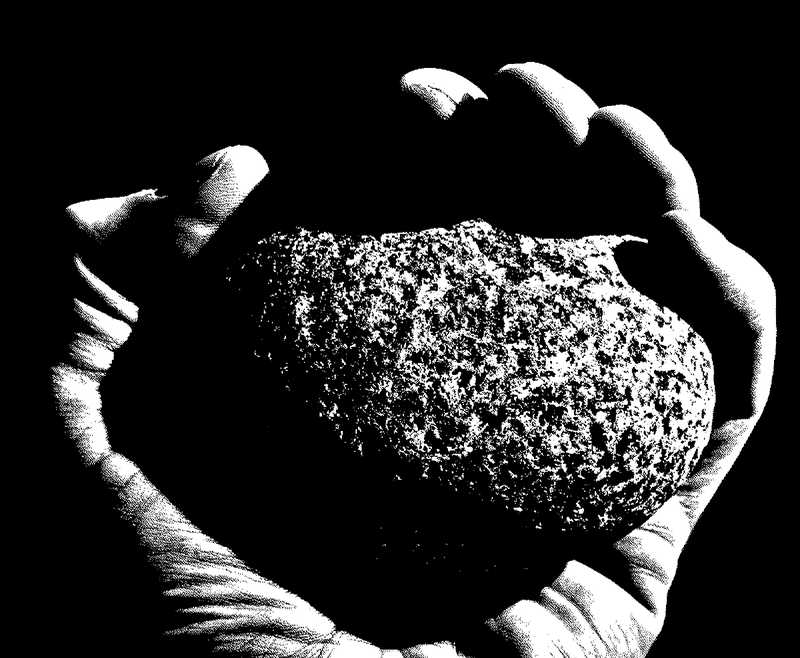
Puncta · Atkinson · Mac 1984
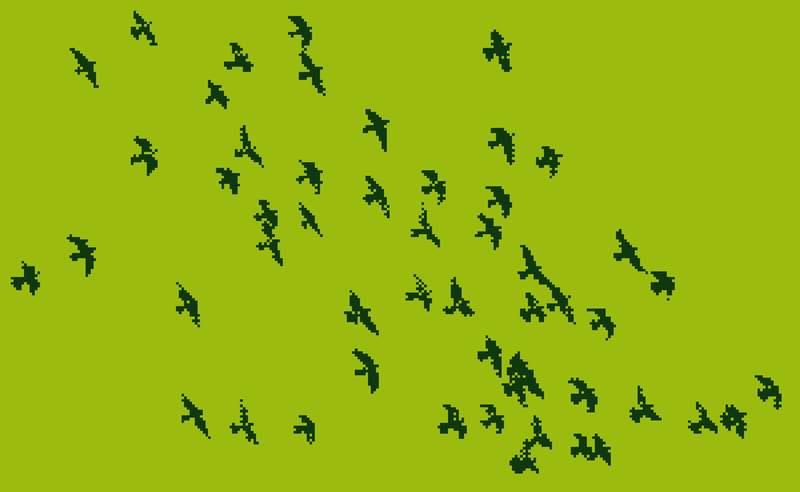
Puncta · Game Boy

Puncta · Game Boy

Puncta · Bitmap · one teal ink
A few colours, and the illusion of all of them.
Dithering is a way to show an image with very few colours, sometimes just two, black and white. Instead of rounding each pixel to the nearest colour, which would leave flat blotches, the error is spread: a pixel that came out too light makes the next one a little darker. From a distance the eye rebuilds the tones.
There are two families. Error diffusion (Floyd-Steinberg, 1976; Atkinson, the 1984 Macintosh algorithm) gives an organic grain with no pattern. Ordered dithering compares each pixel with a fixed matrix: the Bayer matrix produces the recognisable crosshatch of video games and the Game Boy. Puncta has both, plus blue noise, noise and plain threshold.
How to do it in Mote, in three steps.
- 01Open your photo or video. A photo in Puncta, a video in Kinema with the Puncta engine.
- 02Pick the algorithm. Diffusion family for Floyd-Steinberg, Atkinson or Riemersma; Ordered family for Bayer and blue noise. The “Mac 1984” and “Game Boy” styles are ready to use.
- 03Tune and export. Brightness and contrast first: good dithering depends mostly on how the image is prepared. Then pixel size, colours, and export to PNG or video.
- Error diffusion
- 26, incl. Floyd-Steinberg, Atkinson, Riemersma
- Ordered matrices
- 21: Bayer, clustered dots, blue noise, lines
- Brightness, contrast
- −125 → 125
- Colour
- B&W · two inks · CMYK · RGB
In your browser, nothing to install.
Mote Web opens on Puncta, “Mac 1984” style (Atkinson diffusion). The “Game Boy” style shows Bayer dithering in big green pixels.
Open in Mote Web →Questions
- What is dithering?
- A technique that fakes tones with few colours by mixing pixels of different colours. It comes from 1970s–80s computing, when screens and printers had only a handful of colours.
- Floyd-Steinberg or Bayer?
- Floyd-Steinberg for a faithful look and natural grain. Bayer for a deliberate, regular, very “video game” pattern. Atkinson, in between, opens up the highlights and keeps solid blacks.
- How do I get the classic Mac 1-bit look?
- Puncta’s “Mac 1984” style: Atkinson diffusion, black and white. Push the contrast a little and shrink the image if you want visible pixels.
- Can I dither a video?
- Yes, in Kinema with the Puncta engine: every frame is dithered, the sound is kept, export is MP4 or WebM. Mote Web only handles images.
Related effects
- 01Free halftone effect: turn a photo into dots
A photo turned into dots, like a newspaper or a comic. - 02Turn any image into ASCII art
An image or a video rebuilt from characters. - 09Print effects on video
Halftone, ASCII, stippling and dithering on video, frame by frame. - 06Free duotone effect
Two inks, and the whole picture. - M02See the mode Puncta
The printer’s screen in every form: offset dot, Ben-Day, engraving, error diffusion, Bayer, noise. - M07See the mode Kinema
All of the above, on video, setting by setting, frame by frame.